The Chartist Movement was a working-class campaign for political reform in Britain during the 1830s and 1840s. It sought to expand democracy through the People’s Charter, which called for universal male suffrage, secret ballots, and other electoral reforms. Driven by economic hardship and social inequality, Chartists organized mass petitions, rallies, and protests. Although the movement initially failed to achieve its aims, it laid the groundwork for later democratic advances in Britain.
The Chartist Movement
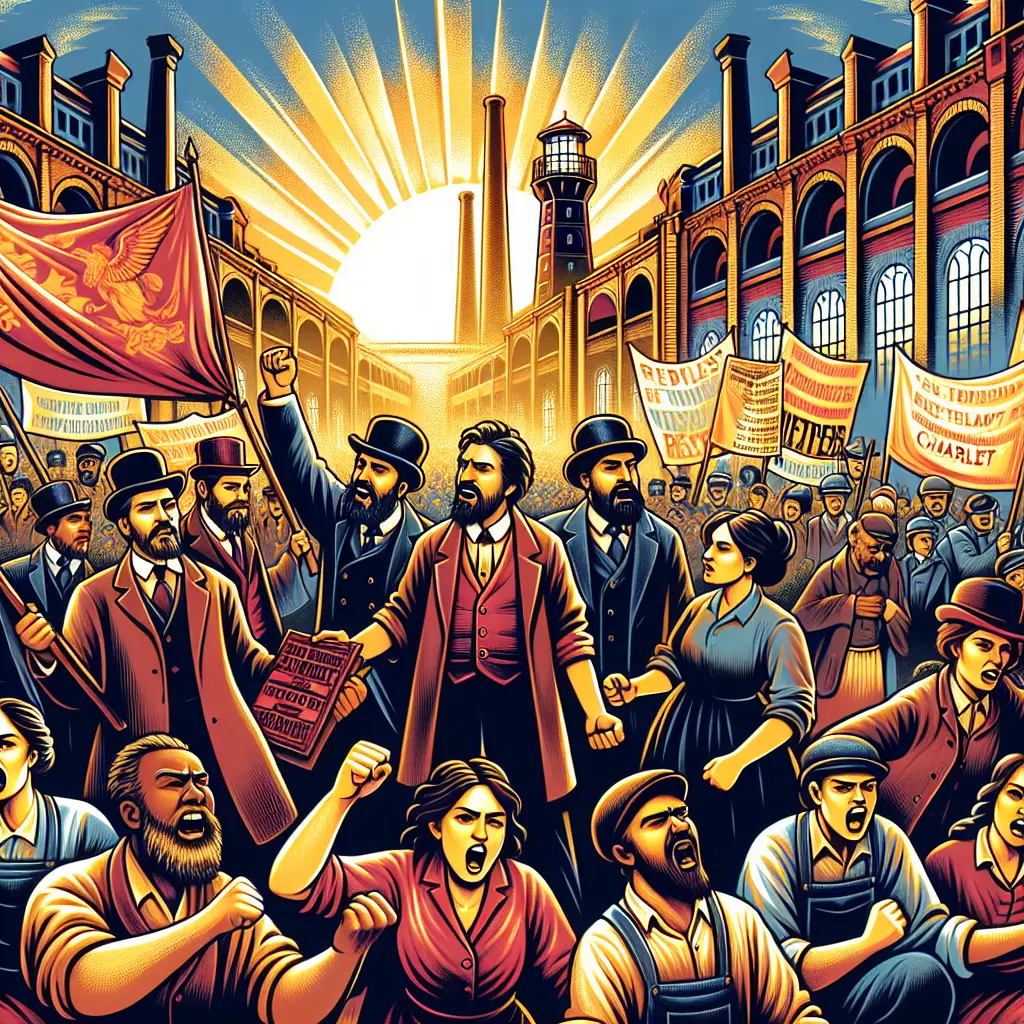
The Chartist Movement was a working-class campaign for political reform in Britain during the 1830s and 1840s. It sought to expand democracy through the People’s Charter, which called for universal male suffrage, secret ballots, and other electoral reforms. Driven by economic hardship and social inequality, Chartists organized mass petitions, rallies, and protests. Although the movement initially failed to achieve its aims, it laid the groundwork for later democratic advances in Britain.
💡 Key Takeaways
- Understand the aims of the People's Charter: universal male suffrage, secret ballots, and other electoral reforms.
- See how economic hardship and social inequality in 1830s-1840s Britain drove working-class activism.
- Learn how Chartists organized: petitions, mass meetings, and sustained campaigns to press for reform.
- Appreciate the movement's legacy and its influence on later political reform and franchise expansion.
❓ Frequently Asked Questions
What was the Chartist Movement?
A working‑class campaign in Britain during the 1830s and 1840s that pressed for broad political reform, organized around the People's Charter.
What were the six demands of the People's Charter?
Universal male suffrage; secret ballots; annual parliaments; equal electoral districts; payment of MPs; and abolition of property qualifications for MPs.
Why did Chartists push for these reforms?
Economic hardship and rising industrialization left workers with little political influence, so Chartists sought to expand democracy and give ordinary people a voice in Parliament.
What impact did the Chartist movement have on British politics?
While the Charter's demands were not immediately realized, the movement raised public debate, influenced later reforms, and helped shape the growth of the British labor movement.