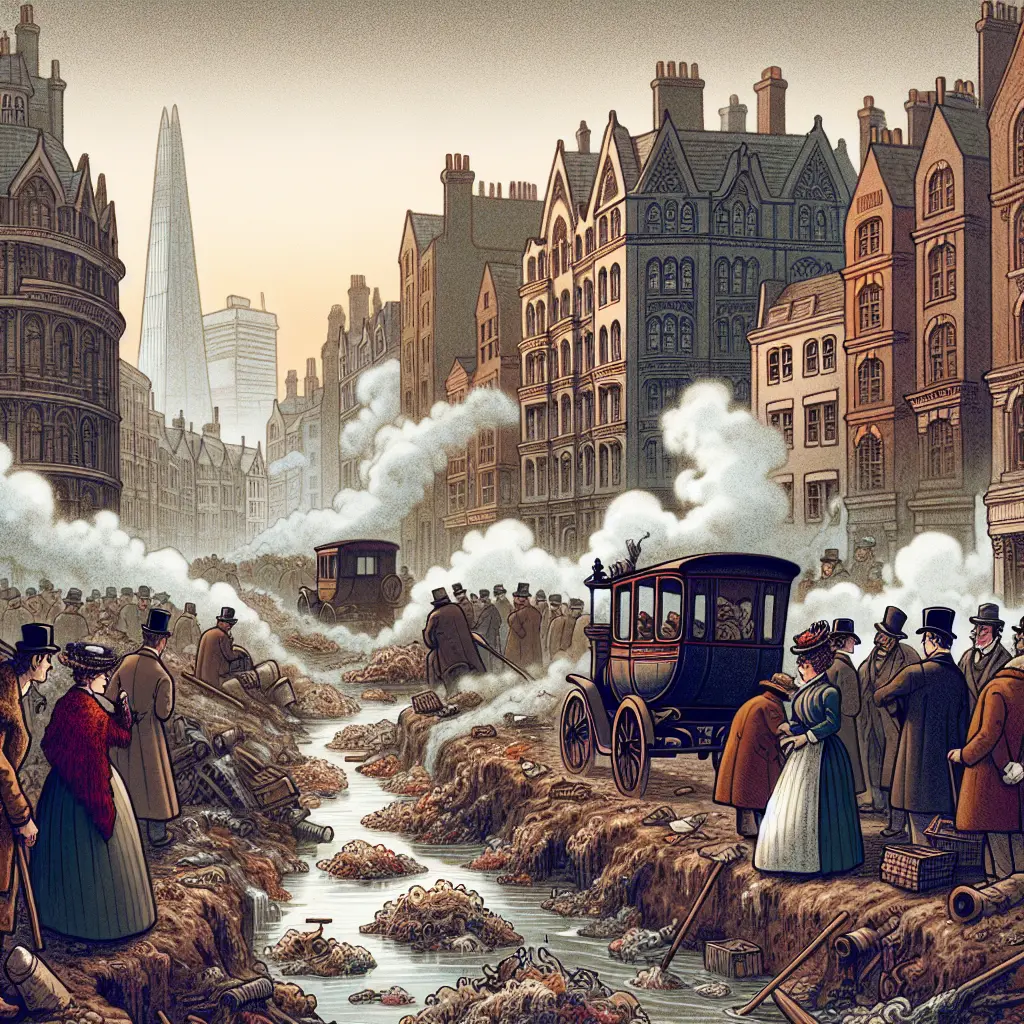
The Great Stink refers to a period during the summer of 1858 in London when the River Thames became overwhelmed with untreated human waste and industrial effluent. The resulting foul odor was so intense that it disrupted daily life and Parliament. This event highlighted the city’s inadequate sanitation infrastructure and prompted urgent action, leading to the construction of a modern sewer system designed by Joseph Bazalgette, which greatly improved public health and urban living conditions.
The Great Stink
The Great Stink refers to a period during the summer of 1858 in London when the River Thames became overwhelmed with untreated human waste and industrial effluent. The resulting foul odor was so intense that it disrupted daily life and Parliament. This event highlighted the city’s inadequate sanitation infrastructure and prompted urgent action, leading to the construction of a modern sewer system designed by Joseph Bazalgette, which greatly improved public health and urban living conditions.
💡 Key Takeaways
- Understand how the Great Stink exposed the link between sanitation, urban planning, and public health in Victorian London.
- Learn how summer heat intensified the Thames odor caused by untreated waste and industrial effluent, disrupting daily life and Parliament.
- Identify the major reforms that followed, including the construction of London's modern sewer system led by Joseph Bazalgette.
- Recognize the event's lasting impact on public health policy and urban infrastructure in Britain.
❓ Frequently Asked Questions
What was the Great Stink?
A severe London summer in 1858 when the River Thames became heavily polluted with untreated human waste and industrial effluent, producing a powerful, foul odor.
What caused the Great Stink?
Untreated sewage and industrial waste flowed into the Thames due to London's inadequate sanitation systems, especially during hot weather.
What impact did the Great Stink have on daily life and Parliament?
The overwhelming smell disrupted daily activities and even interrupted Parliament, illustrating the scale of London's sanitation problems.
Why is the Great Stink historically significant?
It highlighted the city's poor sanitation and helped prompt public health reforms and major improvements to London’s sewer system.