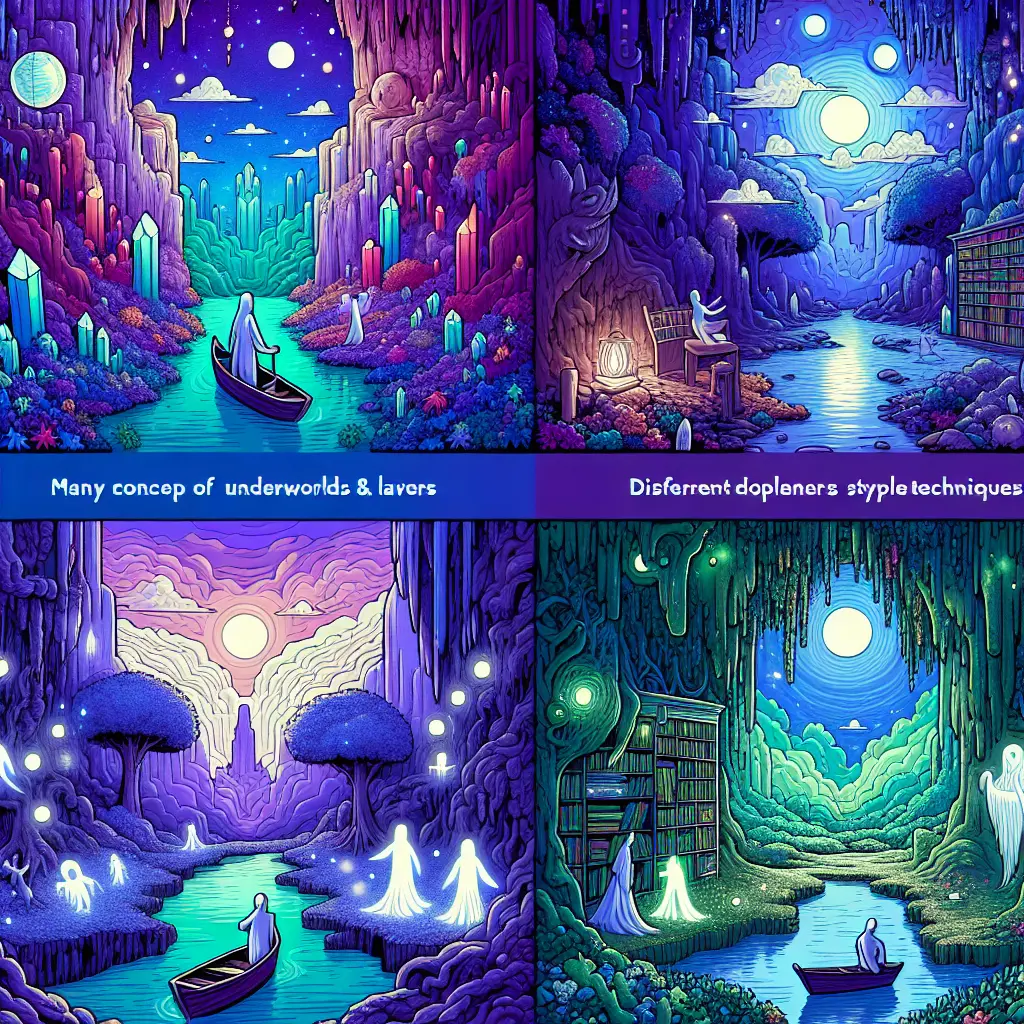
"Underworlds & Afterlives" refers to the mythological, religious, and cultural concepts of realms or dimensions where souls go after death. Underworlds are often depicted as hidden or subterranean places, sometimes associated with judgment, punishment, or transformation. Afterlives encompass a broader range of beliefs about existence beyond physical death, including heavens, hells, reincarnation, or spiritual continuance, reflecting humanity's enduring curiosity and hope regarding what happens when life ends.
Underworlds & Afterlives
"Underworlds & Afterlives" refers to the mythological, religious, and cultural concepts of realms or dimensions where souls go after death. Underworlds are often depicted as hidden or subterranean places, sometimes associated with judgment, punishment, or transformation. Afterlives encompass a broader range of beliefs about existence beyond physical death, including heavens, hells, reincarnation, or spiritual continuance, reflecting humanity's enduring curiosity and hope regarding what happens when life ends.
💡 Key Takeaways
- Compare mythological underworlds and their rules across cultures (location, judgment, punishment, transformation).
- Differentiate between underworlds and other afterlife concepts like heaven, hell, purgatory, or reincarnation.
- Explain how franchises and universes build consistent afterlife systems to support worldbuilding and storytelling.
- Identify common motifs in depictions of afterlife realms (journeys, guardians, cycles, trials).
❓ Frequently Asked Questions
What is the difference between an underworld and an afterlife?
An underworld is a realm where souls may reside after death, often subterranean and associated with judgment or punishment. The afterlife is the broader concept of existence after death and may or may not involve a specific realm.
What are common features found in many underworld or afterlife myths?
Common features include a ruler or gatekeeper, a distinct realm or journey, judgment or reward/punishment, symbolic rivers or paths, and themes of transformation or rebirth.
Can you name some cultural or fictional examples of underworlds or afterlives?
Examples include the Greek Hades; the Egyptian Duat; the Norse Hel; Hindu Naraka; Buddhist Pure Land; and literary works like Dante’s Inferno.
How should I approach answering questions about these concepts on the quiz?
Note who or what oversees the realm, whether the question concerns location, judgment, reward/punishment, and any motifs like rivers, gates, or transformation to guide your answer.