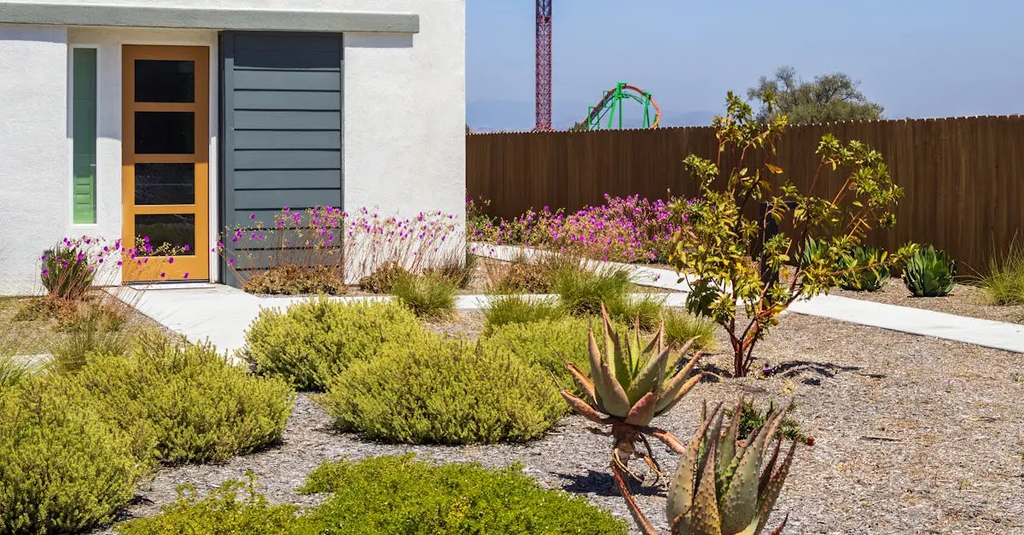
Xeriscaping and drought gardens refer to landscaping techniques designed to minimize water use by incorporating drought-tolerant plants, efficient irrigation, and soil management. These methods reduce the need for supplemental watering, making them ideal for arid climates or regions facing water scarcity. Xeriscaping also promotes environmental sustainability by conserving water, reducing maintenance, and supporting local ecosystems with native or adaptive plant species that thrive in dry conditions.
Xeriscaping & Drought Gardens
Xeriscaping and drought gardens refer to landscaping techniques designed to minimize water use by incorporating drought-tolerant plants, efficient irrigation, and soil management. These methods reduce the need for supplemental watering, making them ideal for arid climates or regions facing water scarcity. Xeriscaping also promotes environmental sustainability by conserving water, reducing maintenance, and supporting local ecosystems with native or adaptive plant species that thrive in dry conditions.
💡 Key Takeaways
- Core principles of xeriscaping and the role of drought-tolerant plants in saving water
- Efficient irrigation methods (drip systems, smart controllers, and rainwater harvesting)
- Soil and mulch strategies to improve moisture retention and reduce evaporation
- Plant selection and garden design for arid climates with low maintenance needs
❓ Frequently Asked Questions
What is xeriscaping?
A water-saving landscaping approach that minimizes irrigation by using drought-tolerant plants, efficient irrigation techniques, and soil management.
What are drought-tolerant plants?
Plants that survive with minimal water once established, typically native or adapted to dry conditions.
Which irrigation methods are common in xeriscaping?
Drip irrigation or soaker hoses deliver water directly to roots, often controlled by timers to reduce waste.
How does soil management support drought gardens?
Mulching and adding organic matter improve moisture retention and soil structure, reducing evaporation.
What is hydrozoning in a drought-friendly landscape?
Grouping plants by similar water needs to simplify irrigation and prevent over- or under-watering.