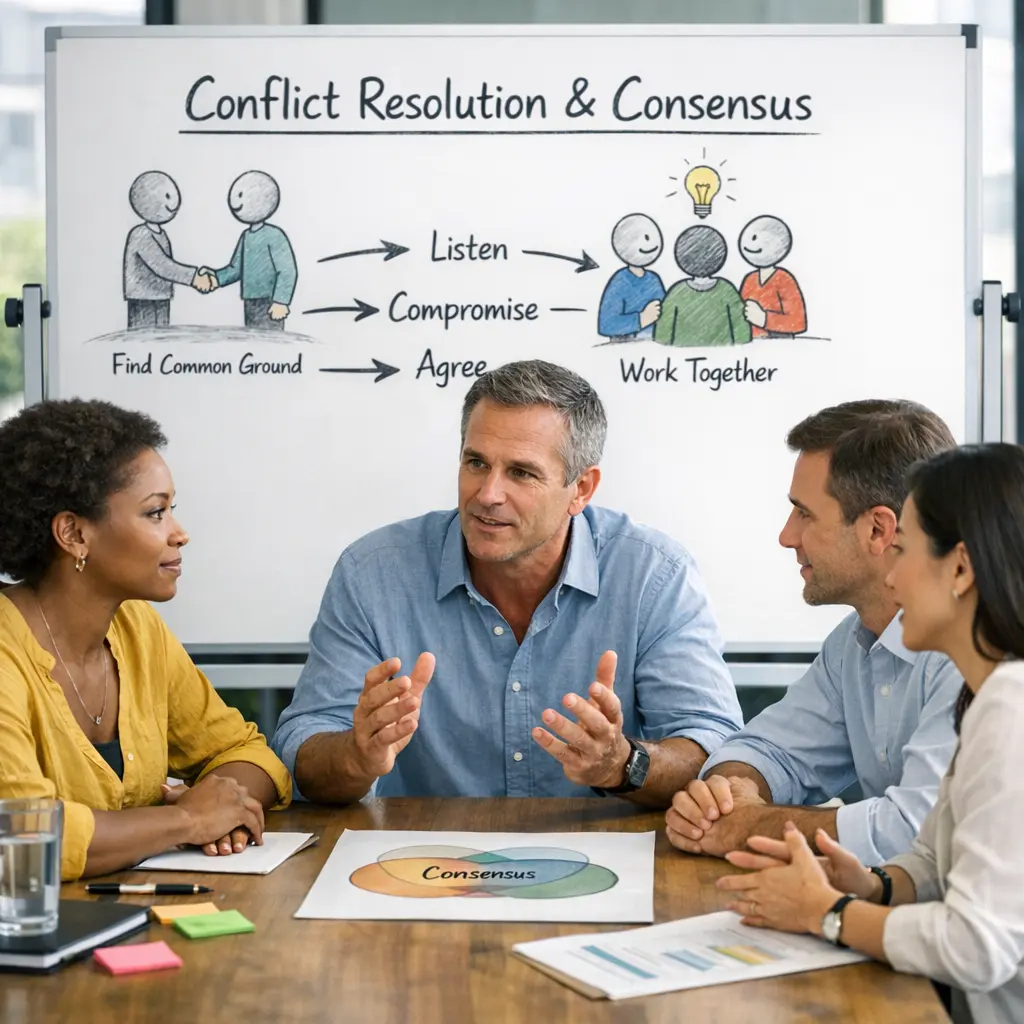
Conflict Resolution & Consensus in Agent Architecture refers to the mechanisms and strategies used by autonomous agents to handle disagreements and reach mutual agreements within a multi-agent system. Conflict resolution involves identifying and addressing conflicting goals, actions, or beliefs among agents. Consensus focuses on collaborative decision-making, ensuring agents align on shared objectives or solutions. Together, these processes enhance coordination, efficiency, and overall system stability in complex, distributed environments.
Conflict Resolution & Consensus
Conflict Resolution & Consensus in Agent Architecture refers to the mechanisms and strategies used by autonomous agents to handle disagreements and reach mutual agreements within a multi-agent system. Conflict resolution involves identifying and addressing conflicting goals, actions, or beliefs among agents. Consensus focuses on collaborative decision-making, ensuring agents align on shared objectives or solutions. Together, these processes enhance coordination, efficiency, and overall system stability in complex, distributed environments.
💡 Key Takeaways
- Identify common sources of conflict in teams and how to recognize early warning signs.
- Learn practical conflict-resolution techniques: active listening, reframing, and interest-based negotiation.
- Understand the difference between consensus and voting and when each method is appropriate.
- Apply a simple, repeatable process to reach durable, collaborative agreements.
❓ Frequently Asked Questions
What is conflict resolution?
Conflict resolution is the process of resolving a dispute by addressing underlying needs and interests, generating options, and agreeing on a solution that satisfies all parties.
What are common conflict resolution styles?
Common styles include avoiding, accommodating, compromising, competing, and collaborating.
What does consensus mean in group decisions, and how is it different from voting?
Consensus means broad, voluntary agreement after discussion and critique, aiming for shared buy‑in rather than a simple majority vote.
What are key steps to reach a consensus?
Define the problem, invite input, brainstorm options, evaluate them, seek agreement, address objections, and document the decision.
How can active listening help in conflict resolution?
Active listening clarifies interests, reduces misunderstandings, shows respect, and helps identify common ground for a win‑win solution.