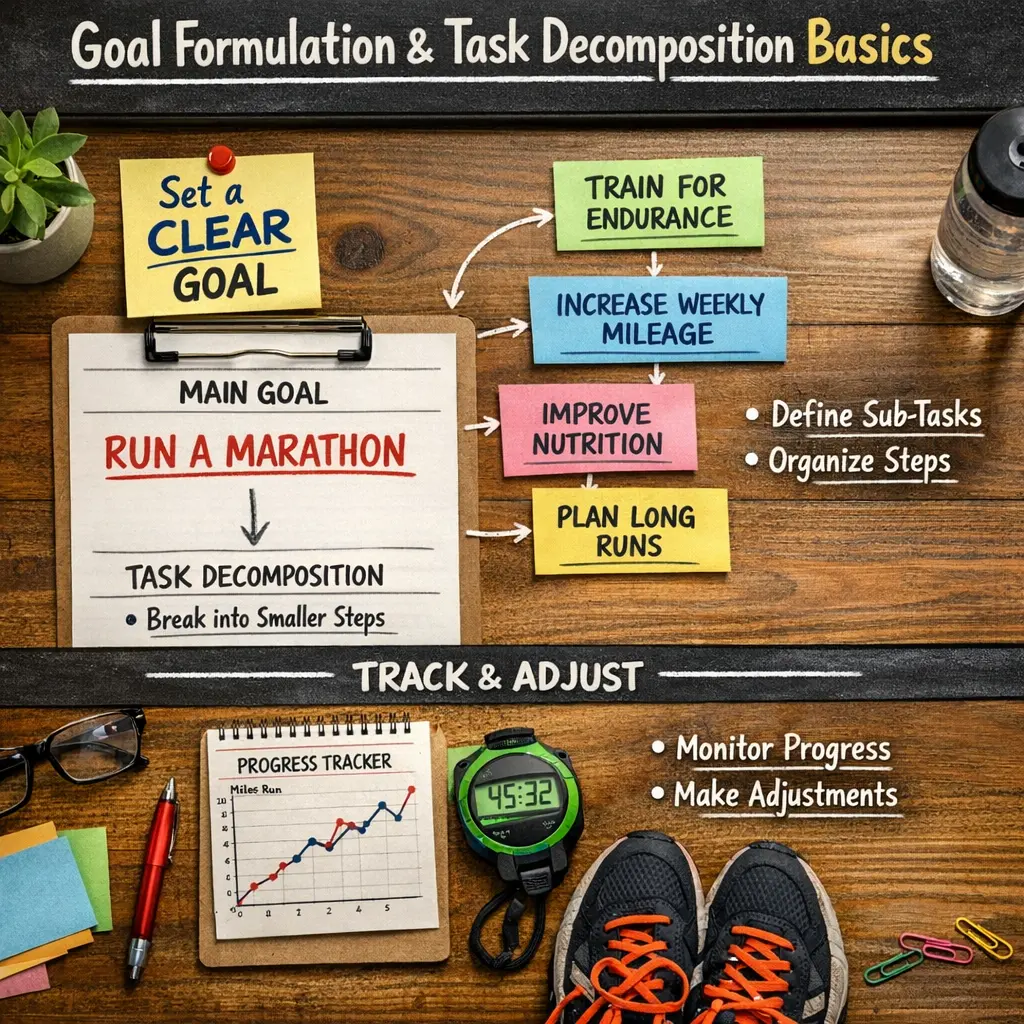
Goal Formulation & Task Decomposition Basics in agent architecture refer to the foundational processes by which an intelligent agent identifies its objectives and systematically breaks them down into manageable sub-tasks. Goal formulation involves defining clear, achievable outcomes, while task decomposition organizes complex goals into smaller, actionable steps. This structured approach enables agents to plan efficiently, prioritize actions, and adapt to changing environments, ensuring effective problem-solving and decision-making within autonomous systems.
Goal Formulation & Task Decomposition Basics+50
Goal Formulation & Task Decomposition Basics in agent architecture refer to the foundational processes by which an intelligent agent identifies its objectives and systematically breaks them down into manageable sub-tasks. Goal formulation involves defining clear, achievable outcomes, while task decomposition organizes complex goals into smaller, actionable steps. This structured approach enables agents to plan efficiently, prioritize actions, and adapt to changing environments, ensuring effective problem-solving and decision-making within autonomous systems.
💡 Key Takeaways
- Define clear, actionable goals using concise language.
- Break a broad goal into smaller tasks with defined outcomes.
- Determine task order and dependencies to create an efficient plan.
- Track progress and adjust tasks as needed to stay on track.
❓ Frequently Asked Questions
What is goal formulation?
Goal formulation is the process of turning a broad aim into a clear, actionable objective with a specific outcome, success criteria, and a deadline.
Why use SMART goals in formulation?
SMART goals are Specific, Measurable, Achievable, Relevant, and Time-bound, which helps with clarity, planning, and tracking progress.
What is task decomposition?
Task decomposition is breaking a larger goal into smaller, manageable tasks that can be planned, assigned, and monitored.
How do you effectively decompose a goal into tasks?
Identify major deliverables or milestones, split them into subtasks, estimate effort, determine order and dependencies, assign owners, and set deadlines.
How do you ensure tasks align with the goal?
Regularly review tasks against the objective, adjust scope as needed, monitor dependencies, and track progress toward milestones.