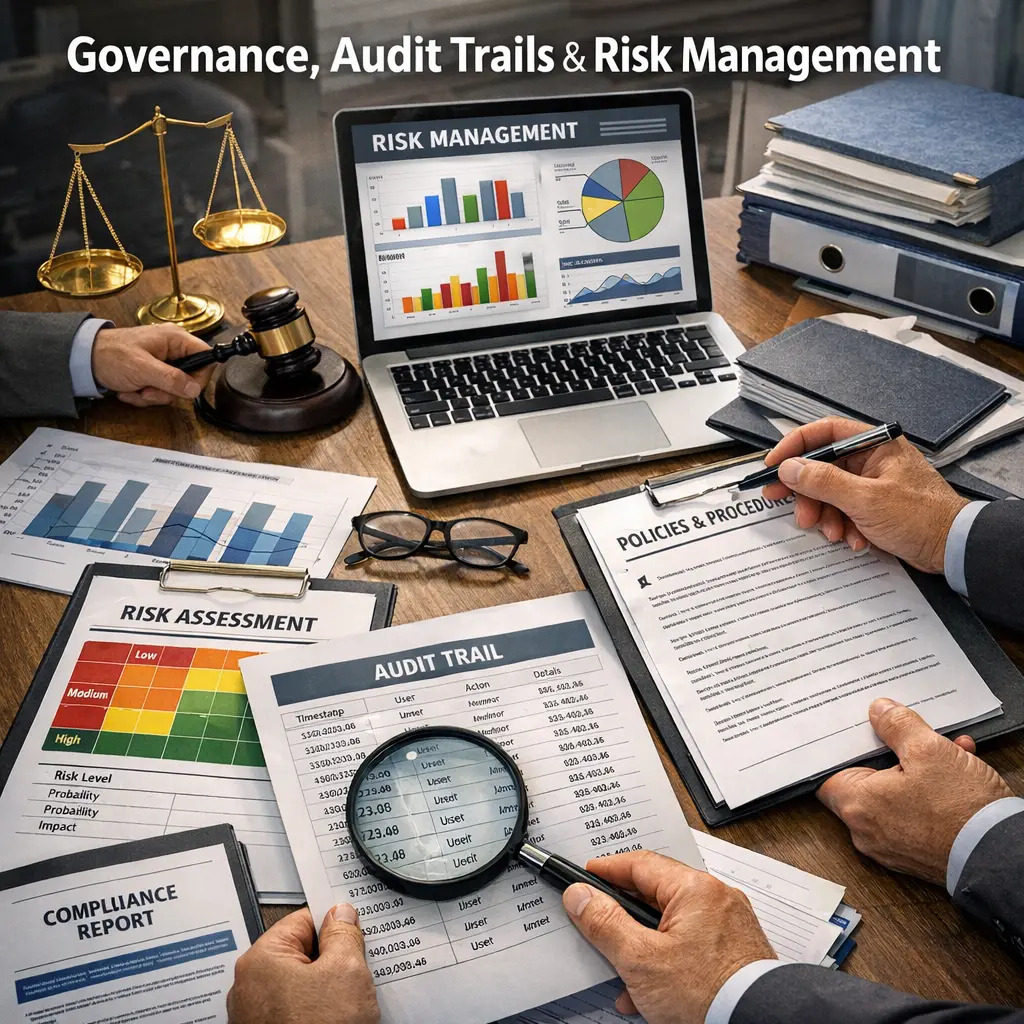
Governance, Audit Trails & Risk Management (Agent Architecture) refers to a framework within intelligent agent systems that ensures oversight, accountability, and compliance. Governance establishes policies and controls, audit trails record and track agent actions for transparency and traceability, and risk management identifies, assesses, and mitigates potential threats or failures. Together, these elements enable secure, reliable, and compliant operation of autonomous agents, fostering trust and minimizing operational and regulatory risks.
Governance, Audit Trails & Risk Management
Governance, Audit Trails & Risk Management (Agent Architecture) refers to a framework within intelligent agent systems that ensures oversight, accountability, and compliance. Governance establishes policies and controls, audit trails record and track agent actions for transparency and traceability, and risk management identifies, assesses, and mitigates potential threats or failures. Together, these elements enable secure, reliable, and compliant operation of autonomous agents, fostering trust and minimizing operational and regulatory risks.
💡 Key Takeaways
- Define governance and its role in setting direction, oversight, and accountability within organizations.
- Explain audit trails, their importance for traceability and regulatory compliance, and how to maintain data integrity.
- Identify key steps in risk management: risk assessment, control design, and ongoing monitoring.
- Describe how governance, audit trails, and risk management interact to enhance transparency, controls, and risk mitigation.
❓ Frequently Asked Questions
What is governance in an organization?
Governance is the framework of policies, roles, and decision-making processes that directs an organization, ensures accountability, and manages risk to achieve objectives.
What is an audit trail and why is it important?
An audit trail is a chronological record of actions, changes, and access events. It provides traceability, accountability, and evidence for investigations and compliance.
What is risk management?
Risk management is the systematic process of identifying, assessing, prioritizing, and mitigating threats to objectives, with ongoing monitoring and communication.
How do audit trails support governance and risk management?
Audit trails enable monitoring of controls, detect unauthorized activity, support investigations, and demonstrate regulatory compliance and policy adherence.