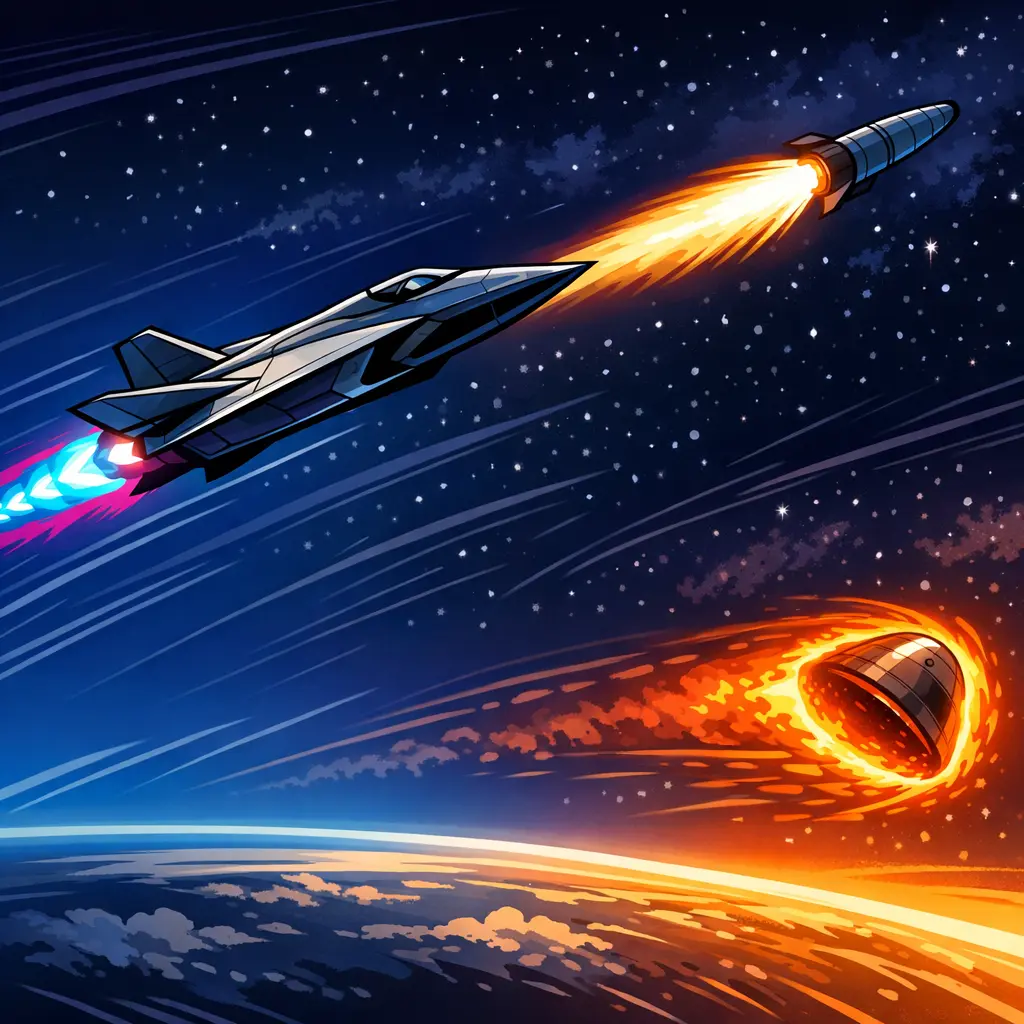
Hypersonics, Space Propulsion & Reentry in engineering and technology careers involve designing and developing advanced vehicles and systems that travel at extremely high speeds, operate in space, and safely return to Earth. Professionals in this field work on cutting-edge technologies such as hypersonic flight, rocket engines, and heat shields, contributing to innovations in defense, space exploration, and satellite deployment. These careers require expertise in aerodynamics, materials science, and propulsion systems.
Hypersonics, Space Propulsion & Reentry
Hypersonics, Space Propulsion & Reentry in engineering and technology careers involve designing and developing advanced vehicles and systems that travel at extremely high speeds, operate in space, and safely return to Earth. Professionals in this field work on cutting-edge technologies such as hypersonic flight, rocket engines, and heat shields, contributing to innovations in defense, space exploration, and satellite deployment. These careers require expertise in aerodynamics, materials science, and propulsion systems.
💡 Key Takeaways
- Define hypersonic speed (Mach 5+) and its implications for aerodynamics, propulsion, and heating.
- Differentiate air-breathing propulsion (scramjet) from rocket propulsion and indicate typical use cases.
- Explain reentry physics, including shock waves, stagnation heating, and the role of thermal protection systems.
- Identify key design trade-offs for hypersonic vehicles, such as materials selection, weight, and propulsion integration.
❓ Frequently Asked Questions
What does 'hypersonic' mean?
In aerospace, hypersonic refers to speeds above Mach 5 (five times the speed of sound). At these speeds, air behavior changes, producing strong shock waves and extreme heating.
What propulsion options are used to reach hypersonic speeds?
Rocket engines (chemical rockets) provide rapid thrust for launch, while air-breathing engines like ramjets and scramjets enable sustained hypersonic flight within the atmosphere by drawing in oxygen. Electric propulsion isn’t practical for hypersonic air-breathing flight.
What is reentry heating and how is it managed?
Reentry heating comes from compressed atmospheric air heating the vehicle on descent. It is managed with Thermal Protection Systems (TPS) such as ablative materials, ceramics, and insulation, plus careful shape to reduce heat transfer.
What are common challenges during reentry?
Extreme temperatures, high dynamic pressure, structural loads, vibrations, and potential communications blackout due to a plasma sheath around the vehicle.
How does hypersonic flight influence vehicle design?
Design must address extreme heating, shock waves, material strength at high temperature, effective insulation, and aerodynamic stability, often requiring advanced materials and careful shaping.