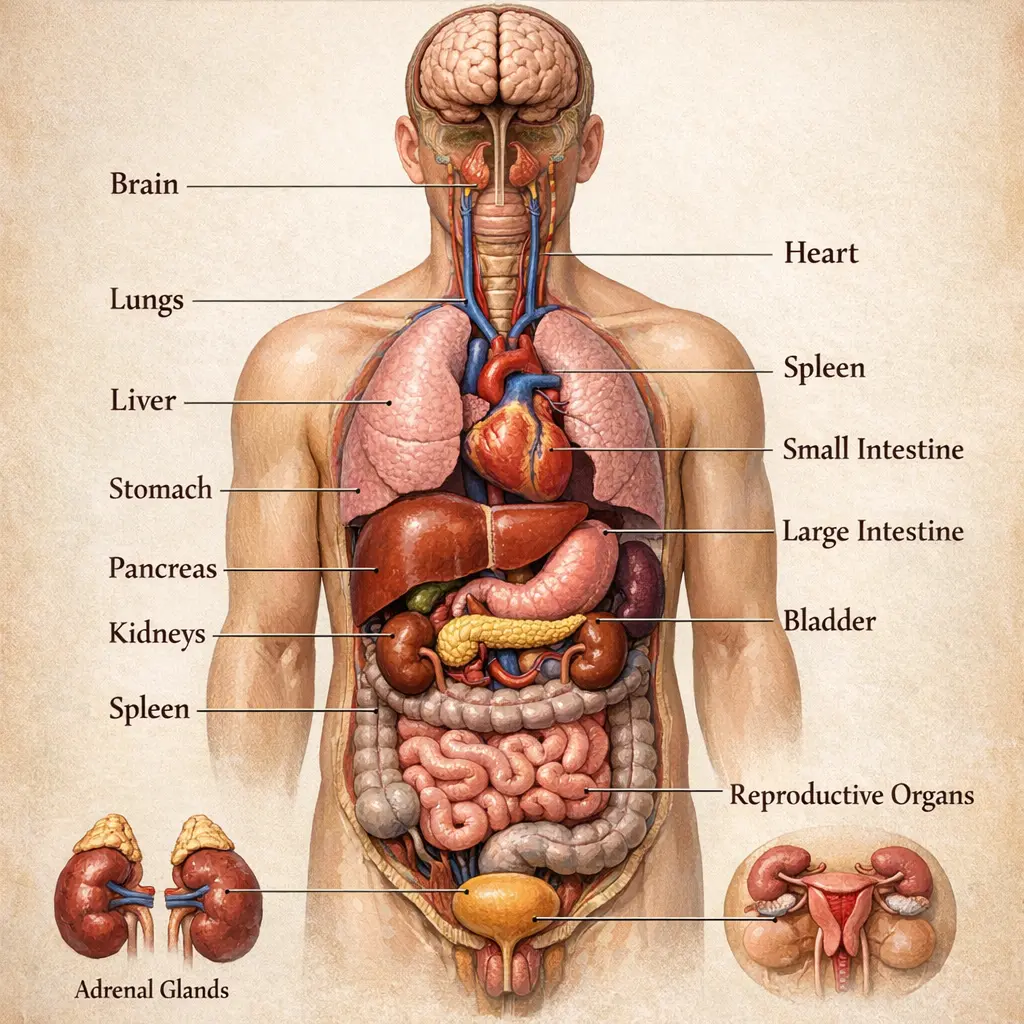
The phrase "Major Organs Overview (Human Body Basics)" refers to a summary of the primary organs essential for human life and their fundamental functions. It typically includes organs such as the heart, lungs, brain, liver, kidneys, and stomach. The overview explains how these organs work individually and together to maintain vital processes like circulation, respiration, digestion, and waste removal, providing a foundational understanding of human anatomy and physiology.
Major Organs Overview+50
The phrase "Major Organs Overview (Human Body Basics)" refers to a summary of the primary organs essential for human life and their fundamental functions. It typically includes organs such as the heart, lungs, brain, liver, kidneys, and stomach. The overview explains how these organs work individually and together to maintain vital processes like circulation, respiration, digestion, and waste removal, providing a foundational understanding of human anatomy and physiology.
💡 Key Takeaways
- Identify the major human organs (heart, lungs, brain, liver, kidneys, stomach, and intestines) and outline their primary functions.
- Explain how the heart and lungs work together to circulate oxygen-rich and oxygen-poor blood.
- Describe the roles of the liver and kidneys in metabolism, detoxification, waste removal, and fluid balance.
- Understand how the circulatory, respiratory, digestive, nervous, and excretory systems interact to maintain homeostasis.
❓ Frequently Asked Questions
What is the function of the heart?
Pumps blood throughout the body, delivering oxygen and nutrients while removing wastes.
What is the brain's main role?
Acts as the control center of the nervous system, coordinating thoughts, movements, and senses.
What do the lungs do?
Exchange oxygen from air with carbon dioxide in the blood during respiration.
What does the liver do for the body?
Metabolizes nutrients, detoxifies chemicals, and produces bile for digestion.
What are the kidneys responsible for?
Filter blood to remove wastes and regulate fluids, salts, and pH balance.