Stencil and screen printing is a technique used to transfer designs onto surfaces, such as fabric or paper, using a mesh screen and a stencil. The stencil blocks certain areas, allowing ink or paint to pass through only the open sections of the mesh. This process creates sharp, repeatable images and is commonly used for making posters, t-shirts, and art prints. It allows for vibrant colors and detailed patterns.
Stencil and Screen Printing
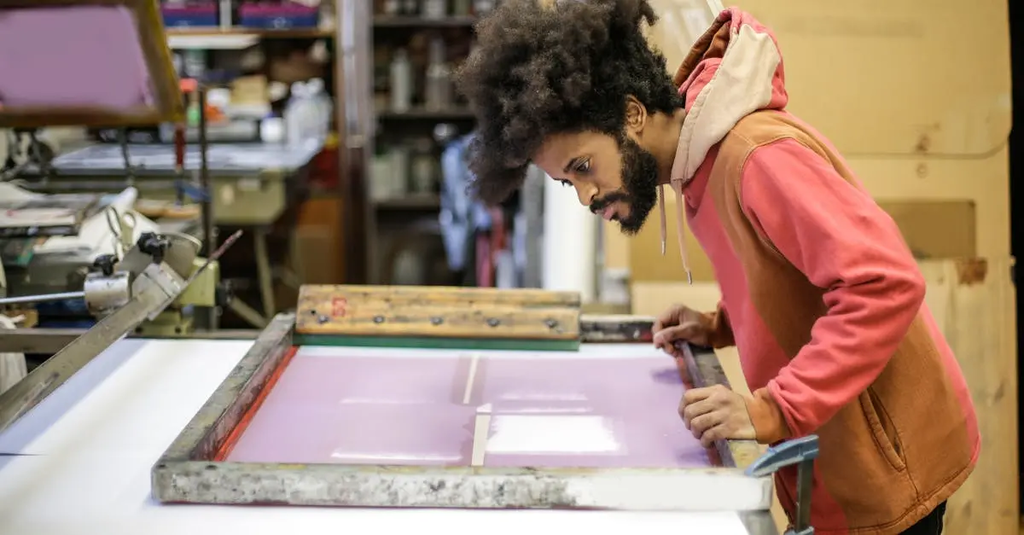
Stencil and screen printing is a technique used to transfer designs onto surfaces, such as fabric or paper, using a mesh screen and a stencil. The stencil blocks certain areas, allowing ink or paint to pass through only the open sections of the mesh. This process creates sharp, repeatable images and is commonly used for making posters, t-shirts, and art prints. It allows for vibrant colors and detailed patterns.
💡 Key Takeaways
- Understand how a stencil and mesh screen work together to transfer ink and create sharp, repeatable images.
- Identify the main components (stencil, mesh, ink, and squeegee) and the basic steps to set up a print on fabric or paper.
- Learn factors that affect print quality, such as mesh count, stencil detail, ink consistency, and alignment.
- Recognize common issues (bleed, ghosting, incomplete transfer) and simple troubleshooting plus finishing steps like drying and curing.
❓ Frequently Asked Questions
What is stencil printing?
Stencil printing uses a cut-out stencil to block parts of a design; ink passes only through the open areas of the stencil and screen to transfer a sharp, repeatable image onto a surface.
How does screen printing differ from stencil printing?
Screen printing uses a woven mesh screen prepared with a stencil. Ink is pushed through the unblocked mesh with a squeegee onto the substrate to create bold prints on fabric, paper, and more.
What tools are commonly used in stencil and screen printing?
Common tools include a mesh screen, stencil, ink or paint, and a squeegee. Screen preparation materials like emulsion are used to create and fix the design on the screen.
What surfaces can you print on with these techniques?
Fabric, paper, posters, tote bags, and other flat surfaces are suitable for stencil and screen printing.