Advanced rose diseases refer to severe or progressive infections and disorders affecting the blooms of roses and, in some contexts, lotuses. These diseases can be caused by fungi, bacteria, or viruses, leading to symptoms such as discolored petals, deformed flowers, premature wilting, and reduced bloom quality. Common examples include black spot, powdery mildew, and botrytis blight. Managing these diseases often requires targeted treatments and careful garden hygiene to protect flower health and appearance.
Advanced Rose Diseases
Advanced rose diseases refer to severe or progressive infections and disorders affecting the blooms of roses and, in some contexts, lotuses. These diseases can be caused by fungi, bacteria, or viruses, leading to symptoms such as discolored petals, deformed flowers, premature wilting, and reduced bloom quality. Common examples include black spot, powdery mildew, and botrytis blight. Managing these diseases often requires targeted treatments and careful garden hygiene to protect flower health and appearance.
💡 Key Takeaways
- Identify and differentiate major rose diseases (e.g., black spot, powdery mildew, rust, botrytis) by symptoms and disease life cycles.
- Apply advanced cultural practices to reduce disease pressure, including pruning infected canes, sanitation of tools, improving air circulation, watering at the base, and mulching.
- Implement integrated pest management (IPM) with rotation of fungicide modes of action, timely applications, and disease forecasting to manage rose diseases responsibly.
- Diagnose diseases from signs and symptoms and develop an evidence-based management plan, including selecting resistant cultivars when available.
- Understand how environmental factors and microclimate influence disease development and adjust care to minimize risk.
❓ Frequently Asked Questions
What are the most common rose diseases and how can I recognize them?
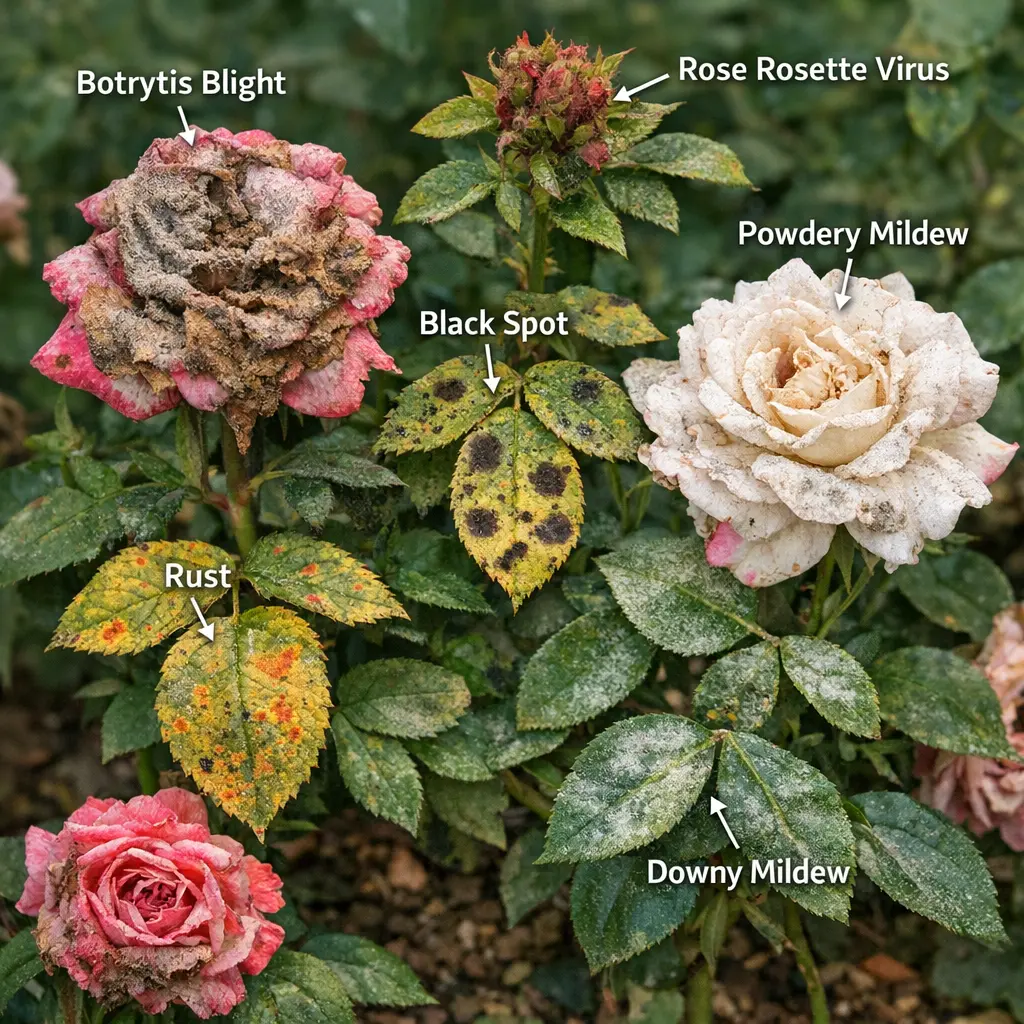
Powdery mildew: white powdery coating on leaves and buds. Black spot: round black spots with yellow halos and leaf yellowing. Downy mildew: purplish or brown blotches on the upper leaf surface. Botrytis blight: gray, fuzzy mold on buds and flowers. Rose rust: orange or yellow pustules on the undersides of leaves.
How can I prevent rose diseases in an advanced garden?
Choose disease‑resistant varieties, ensure good air circulation and full sun, water at the base, remove infected leaves promptly, clean up plant debris, sanitize pruning tools between plants, and use preventive fungicides if disease pressure is high.
What is Rose Rosette Disease and how should I manage it?
Rose Rosette Disease is a viral‑like disease spread by eriophyid mites that causes witches' broom, distorted growth, and abnormal thorns. There is no cure; remove and destroy infected plants and nearby suspect stock, sanitize tools, and replace with resistant cultivars while monitoring for mite activity.
How should I diagnose rose problems to decide on treatment?
Observe signs (spots, mildew, mold, distortion) and timing, inspect leaf undersides for spores or pests, rule out pests, and compare with reputable guides or extension resources to choose targeted treatments rather than guessing.