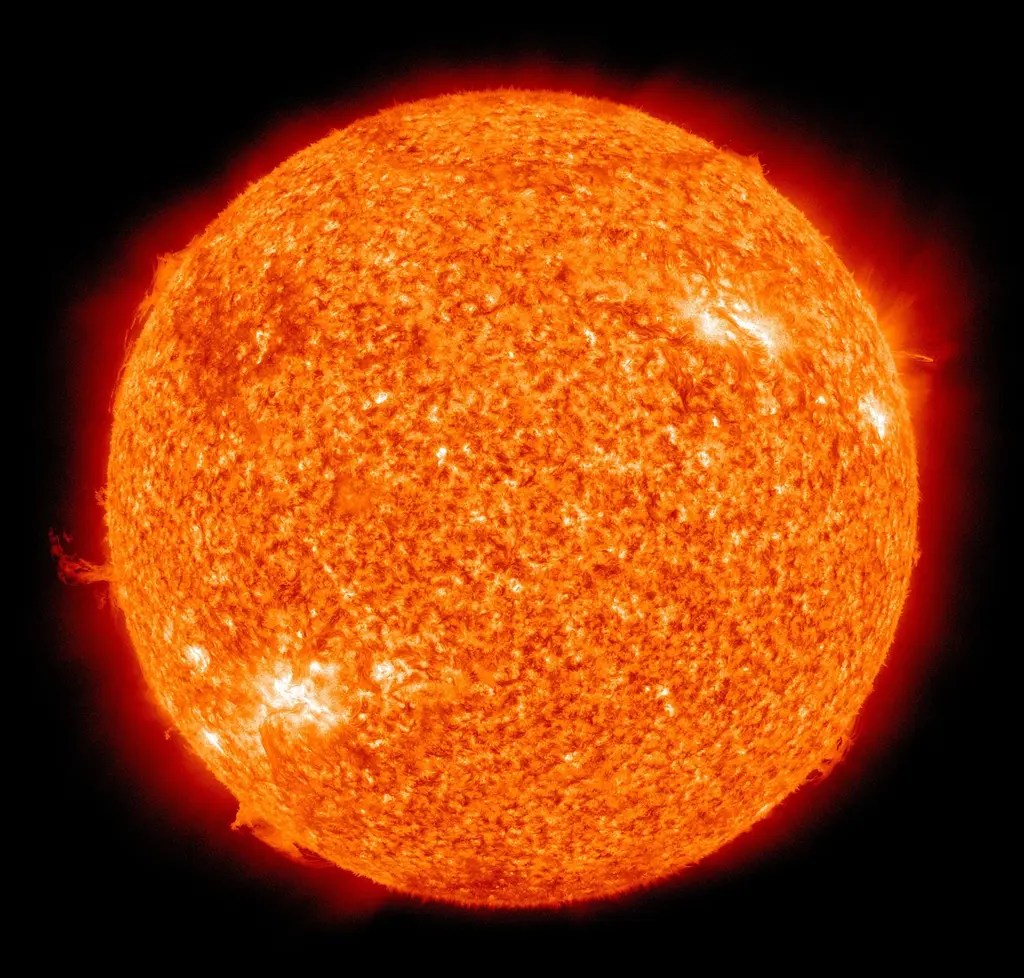
Solar flares are sudden, intense bursts of energy from the Sun’s surface, releasing radiation across the electromagnetic spectrum. These powerful eruptions can disrupt satellite communications, GPS systems, and power grids on Earth. Often accompanied by dramatic auroras, solar flares highlight the Sun’s unpredictable and potentially dangerous nature, reminding us of the dynamic forces at work in our solar system and the vulnerability of modern technology to space weather.
Solar Flares
Solar flares are sudden, intense bursts of energy from the Sun’s surface, releasing radiation across the electromagnetic spectrum. These powerful eruptions can disrupt satellite communications, GPS systems, and power grids on Earth. Often accompanied by dramatic auroras, solar flares highlight the Sun’s unpredictable and potentially dangerous nature, reminding us of the dynamic forces at work in our solar system and the vulnerability of modern technology to space weather.
💡 Key Takeaways
- What solar flares are and how they originate from the Sun's magnetic activity
- Key characteristics of flares: energy release, radiation across the spectrum, and short duration
- How flares are classified (C, M, X) and detected by solar observatories
- Potential impacts on Earth and technology: radio communications, satellites, power grids, and space weather forecasting
❓ Frequently Asked Questions
What is a solar flare?
A sudden, intense burst of radiation from the Sun's surface or atmosphere caused by magnetic energy release during solar activity. Flares emit energy across the electromagnetic spectrum.
How are solar flares classified?
Flares are classified by peak X-ray brightness in the 1–8 Å band: A, B, C, M, and X, with each class representing a tenfold increase in brightness. A number (e.g., M3) indicates intensity within that class.
What effects can solar flares have on Earth?
They can disrupt high-frequency radio communications and GPS signals, increase radiation exposure for high-altitude flights, and trigger auroras. When linked with coronal mass ejections, they can drive geomagnetic storms affecting satellites and power grids.
How do scientists study solar flares?
Researchers observe the Sun with space- and ground-based telescopes across X-ray, ultraviolet, and visible light, monitor magnetic activity, and use models to understand energy release and particle acceleration during flares.
What is the difference between a solar flare and a CME?
A solar flare is a rapid brightening due to energy release in the solar atmosphere, emitting radiation. A coronal mass ejection (CME) is a large eruption of solar plasma into space, which can impact Earth after traveling through space.